September 2, 2026
Why I Stopped Building RadResale
Last month I stopped working on RadResale.
I built it for local kids’ resale shops with constantly changing, one-of-one inventory. A stroller, a jacket, a high chair, a toy, most of it never makes it online because photographing, describing, pricing, posting, and then remembering to take each thing back down is too much work for a busy shop.
The idea was to reduce that whole process to one action: take a photo.
Before getting to why I stopped, I wanted to show what came out the other side. I like this product. It got much more complete than a small local experiment had any right to be.
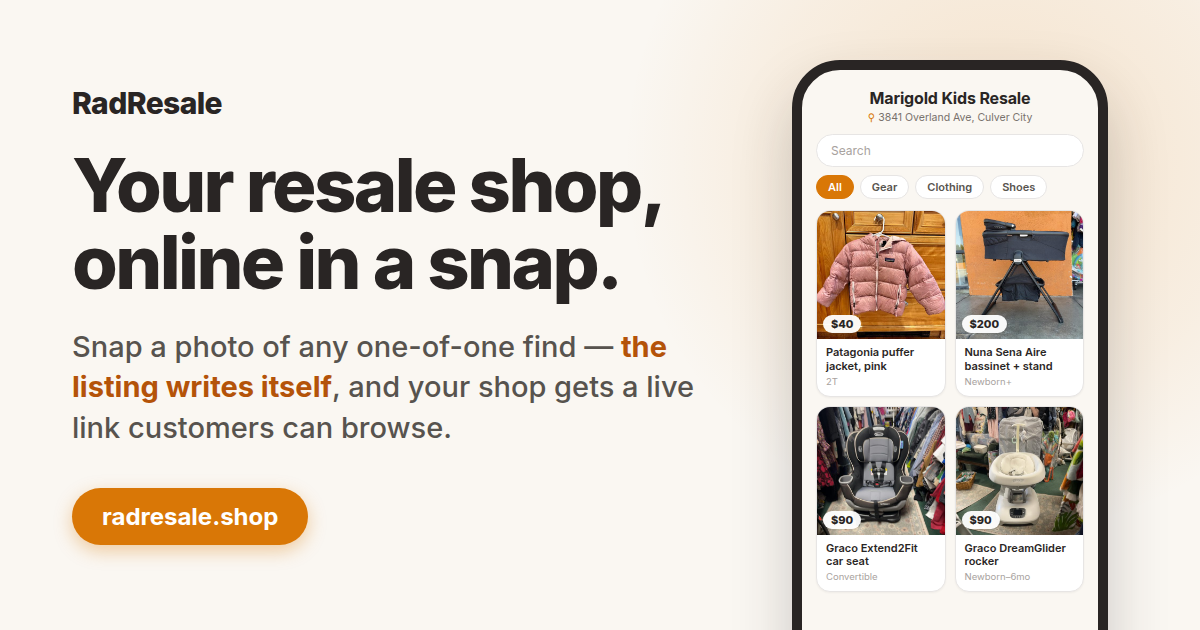
The site used a real-looking shop catalog to make the promise concrete: a customer could see what was in store before making the trip.
A staff member could start with a photo.
The intake flow was built for a phone at the counter. Staff could take up to four photos, add a price if they had one, and send the item to the catalog. RadResale then wrote a first title, description, category, condition note, and price suggestion. The staff member could edit any of it.
One-of-a-kind resale inventory is messy, especially when an item looks a lot like several versions of the same product. I cared about the app being conservative here. A weak guess should not become a confident-looking listing. When the evidence was thin, the product kept the public language general and gave the staff member a note about what to check.
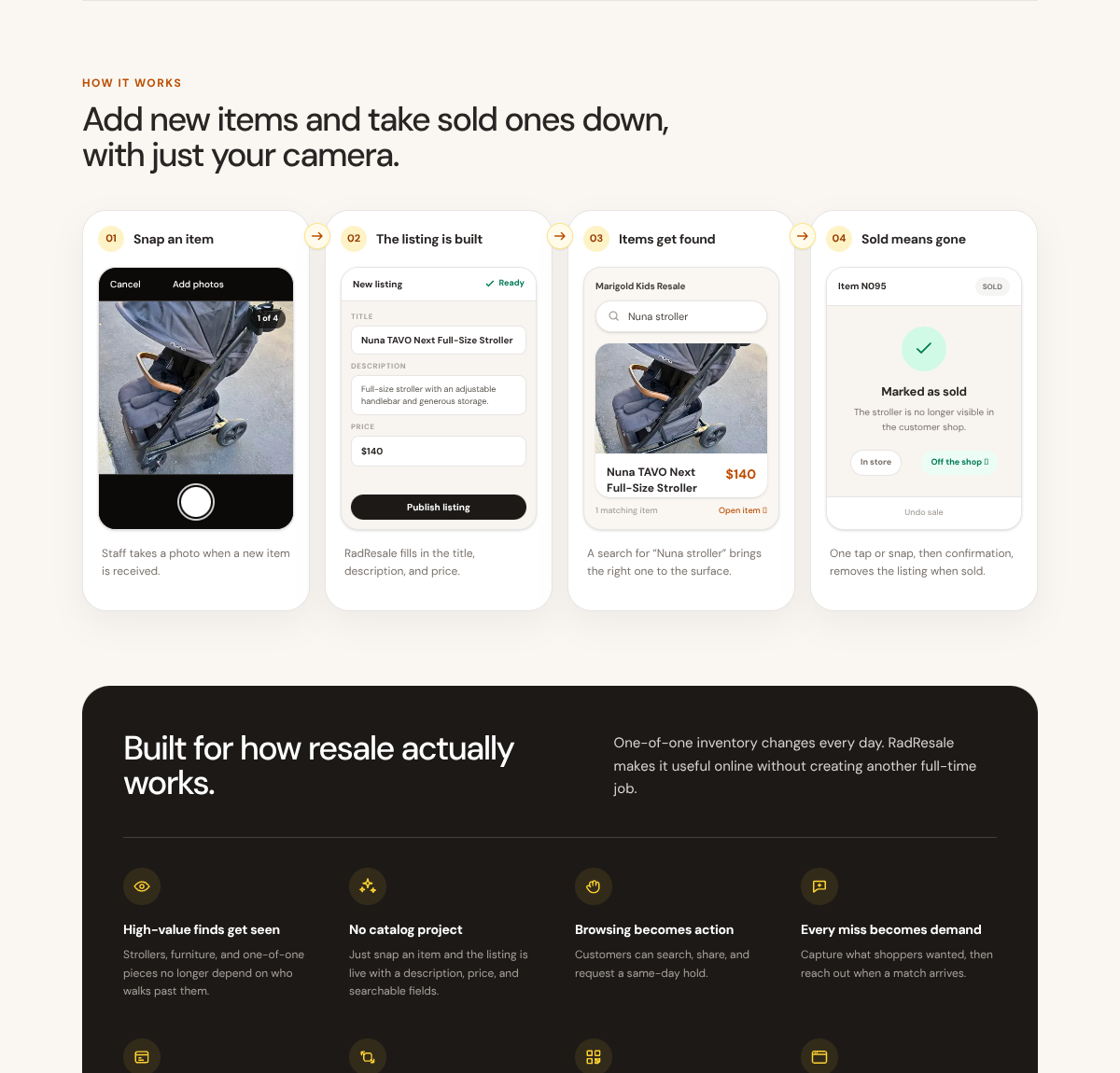
The product site’s four-step walkthrough. A staff member could photograph an item, review the first draft, make it findable, and take it out of the public shop once it sold.
The customer experience was a real storefront.
Once an item was live, it showed up in a shop’s own catalog, with search, category filters, a detailed item page, photos, size or age information, condition, price, and a link to the current retail price when one was useful. You can still see the live demo storefront and one of its item pages.
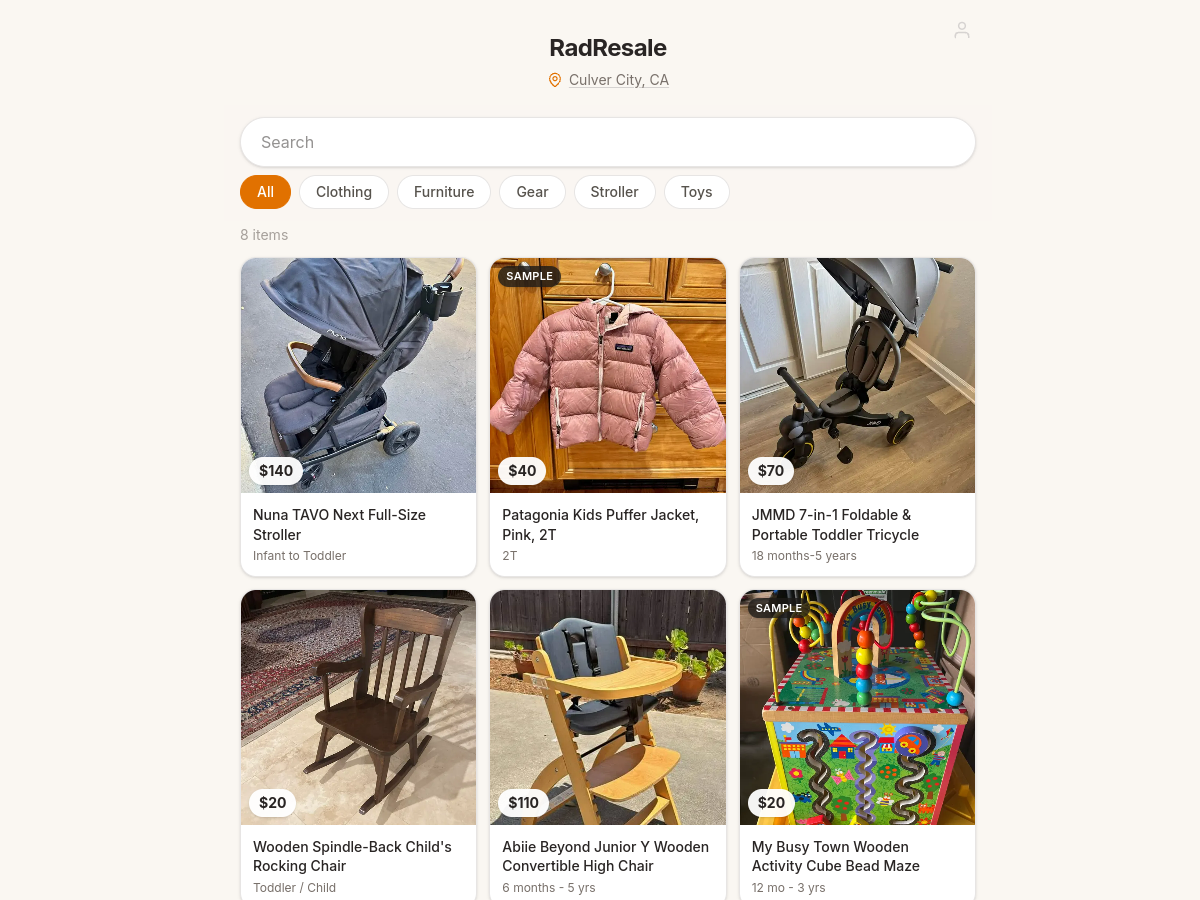
The live catalog. A parent could search, filter by category, open an item, and decide whether the trip to the shop was worth making.
The point was not to turn resale into regular ecommerce. These items are often available exactly once. The customer experience needed to make that feel useful, not misleading: browse what is there, open the item, and request a same-day hold.
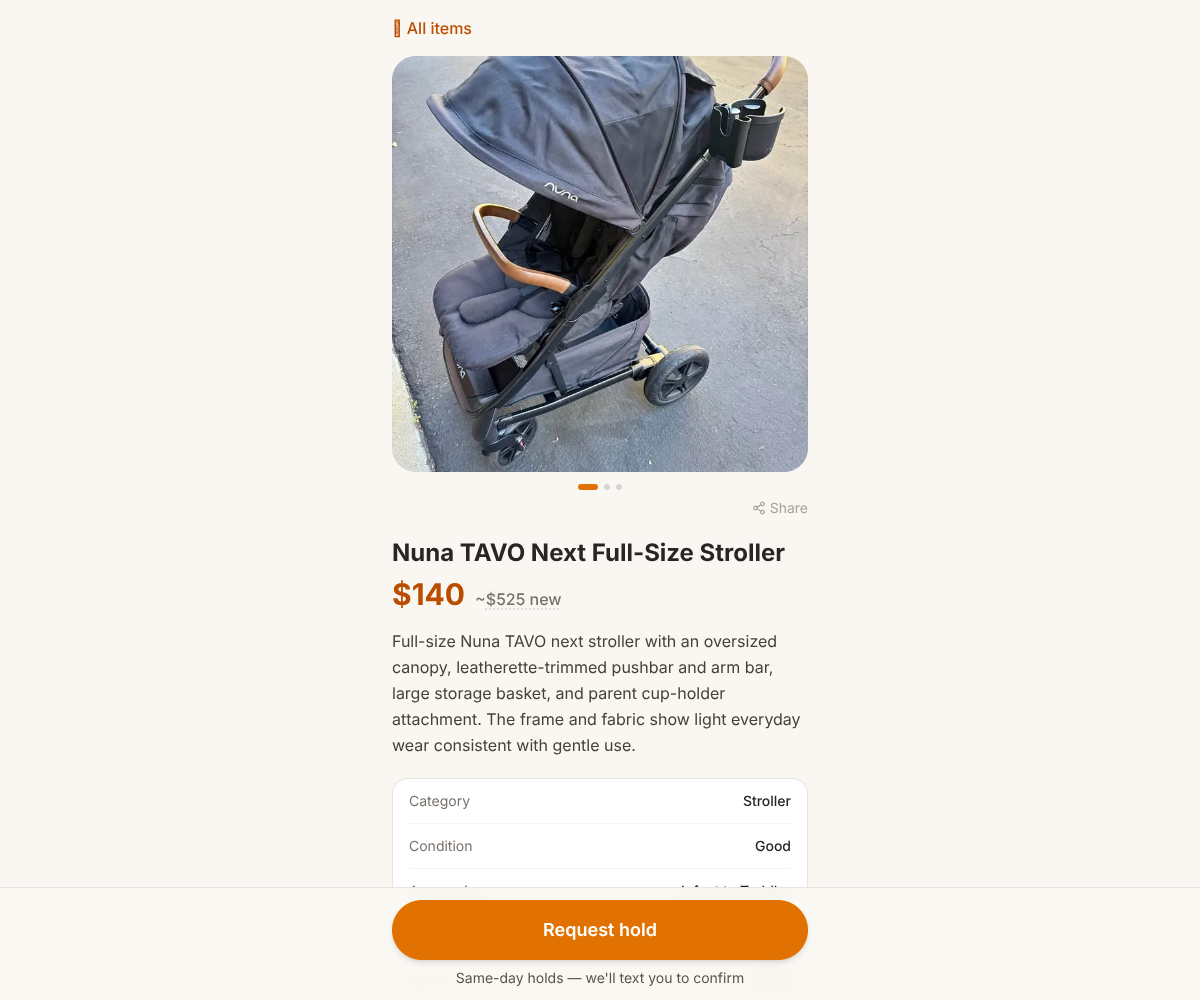
The live item page for a Nuna stroller. The decision was intentionally small: look through the photos, check the condition and price, then request a same-day hold.
A hold became a staff decision.
The buyer did not get an automatic promise. They sent a hold request, and the shop confirmed it. If an item was already on hold, the next interested buyer could join the line. That came directly from the practical concern every shop owner has: holding an item means taking it off the floor for someone who may never show.
When an item sold, it came down.
Staff could find an item by scanning its optional QR sticker or by taking a quick photo at the register, then confirm the match before marking it sold. The listing disappeared from the public shop. That last step mattered as much as getting something online. A storefront full of sold inventory stops being trustworthy fast.
The app also included inventory editing, public and private fields, a simple admin for setting up shops, wait-list capture for missed items, and a master view for managing multiple stores. I tested it on my phone with real inventory and deployed it. It was ready for a pilot.
The shops wanted customers.
I had a few meaningful conversations with local owners. One was already making Instagram and Facebook Marketplace work well enough. Another was too overwhelmed to add anything new. The clearest feedback was also the most important: a better storefront only mattered if it brought shoppers with it.
RadResale made inventory easier to browse. It could make the back room more organized. It could not create local demand on its own.
Facebook and Instagram are messy places to sell one-of-one inventory, but they already have an audience. A cleaner destination asks an owner to promote one more place. That is a hard trade unless it produces a measurable outcome.
I built too far ahead of the evidence.
I had planned to talk with eight to twelve shops before investing deeply. I got to roughly three meaningful conversations. The app became compelling quickly, and building it felt productive, so I kept going.
Listing labor was a real problem. It just was not the problem that determined whether an owner would adopt the product. The owners I met cared more about whether a channel already brought in sales.
I knew customer acquisition was the major risk from the beginning. More of the early effort should have gone toward testing that risk. Walking into stores produced better information than weeks of research or another round of product work.
The remaining business was a different one.
For RadResale to create enough value, it would need to bring local shoppers with it. That means parent communities, local promotion, partnerships, search traffic, or eventually a marketplace with inventory from multiple stores.
All of those paths ask for local density and sustained consumer marketing. Shoppers want enough nearby inventory before they visit. Shops want shoppers before they contribute inventory. I do not have the resources or desire to build that kind of company right now.
There may be a narrower market that would find the product useful. I did not find a reachable, motivated market large enough to justify the customer-acquisition effort under this model. I am comfortable leaving that question unanswered.
What I am keeping.
The code, research, domain, and product history will stay around. I am proud of the application. The work around AI confidence, human editing, privacy, mobile intake, and one-of-a-kind inventory will carry into whatever I build next.
I am also keeping the lesson. A polished product can make the original idea feel more real than the market has earned. The next time I see that happening, I want to spend more time with the people who would have to choose it.
I like this product, which made the decision harder. I am glad I built it. I am ready to put it down.